
condition
Types of Headache We Treat
Not all headaches are the same. Effective treatment depends on correctly identifying the type of headache you are experiencing and understanding its underlying drivers. The most common types we see and treat in clinic include:
Cervicogenic Headache
Cervicogenic headache originates from dysfunction in the cervical spine, most commonly in the upper three vertebrae. Pain typically begins at the base of the skull and radiates forward over the top of the head or behind the eyes. It is often one-sided and may be accompanied by neck stiffness or restricted cervical movement. This type of headache responds particularly well to chiropractic adjustment.
Tension-Type Headache
Tension-type headache is the most common headache presentation worldwide. It is characterised by a dull, pressing sensation that is often described as a tight band around the head. It is typically bilateral and not aggravated by physical activity. Muscular tension in the neck, shoulders, and suboccipital muscles is a frequent contributing factor, and manual therapy directed at these structures can significantly reduce frequency and intensity.
Migraine
Migraine is a neurological condition involving recurring episodes of moderate to severe head pain, typically one-sided and pulsating in character, often accompanied by nausea, light sensitivity, and sound sensitivity. Some people experience an aura before the headache phase begins. While migraine has a primary neurological basis, musculoskeletal and postural factors can act as significant triggers. Chiropractic care can help reduce the frequency of migraines by addressing these contributing factors.
Occipital Neuralgia
Occipital neuralgia involves irritation of the occipital nerves, which run from the top of the spinal cord up through the scalp. It produces sharp, shooting, or electric pain in the upper neck and back of the head. It is often triggered by muscle tension or joint restriction in the upper cervical spine and can be effectively managed through targeted chiropractic treatment.
The Connection Between the Cervical Spine and Head Pain
Understanding why chiropractic care can be effective for headaches requires an appreciation of the close anatomical relationship between the cervical spine and the structures involved in head pain. The upper three cervical vertebrae share neurological connections with the trigeminal nucleus, the area of the brainstem that processes pain signals from the face and head. This means that dysfunction in the upper cervical spine can directly influence the generation and experience of head pain.
Additionally, the suboccipital muscles at the base of the skull, the upper trapezius, and the sternocleidomastoid are all frequent contributors to both tension headache and cervicogenic headache through the development of active trigger points. Addressing these muscles through manual therapy is a core component of our headache treatment.
How We Treat Headaches and Migraines at Ancoats Chiropractic Clinic
Chiropractic Adjustments for Headache Relief
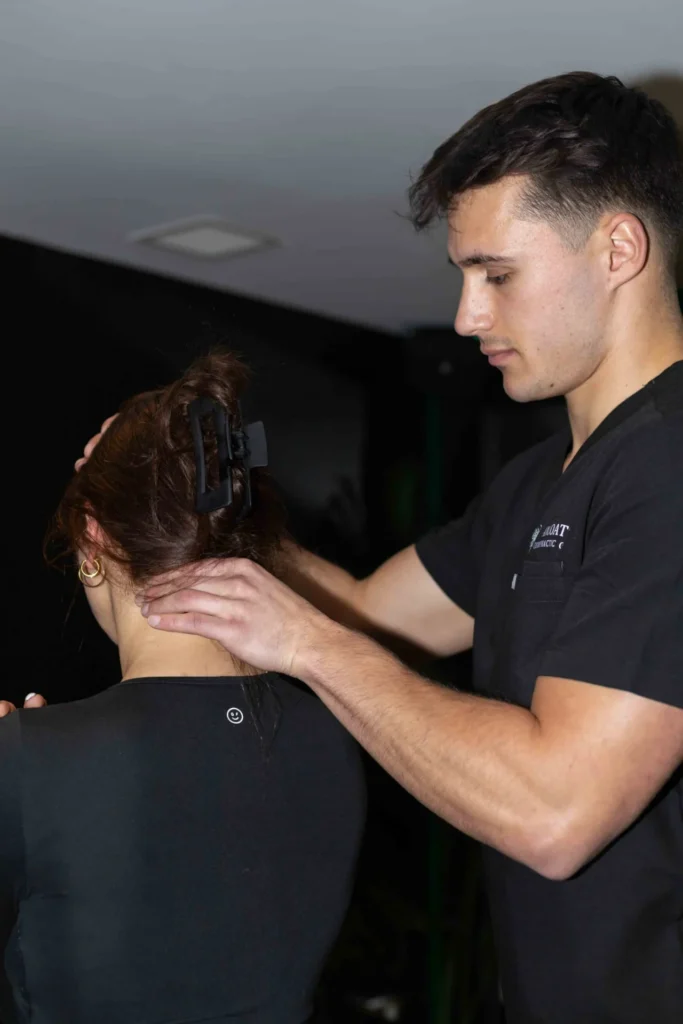
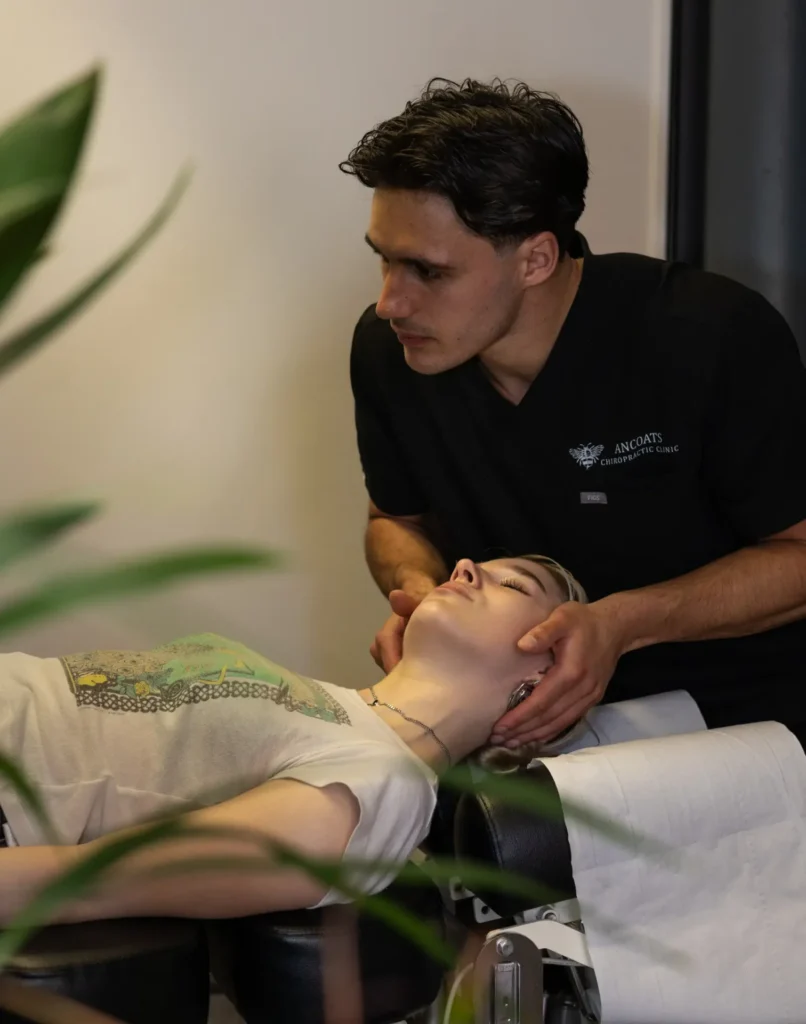
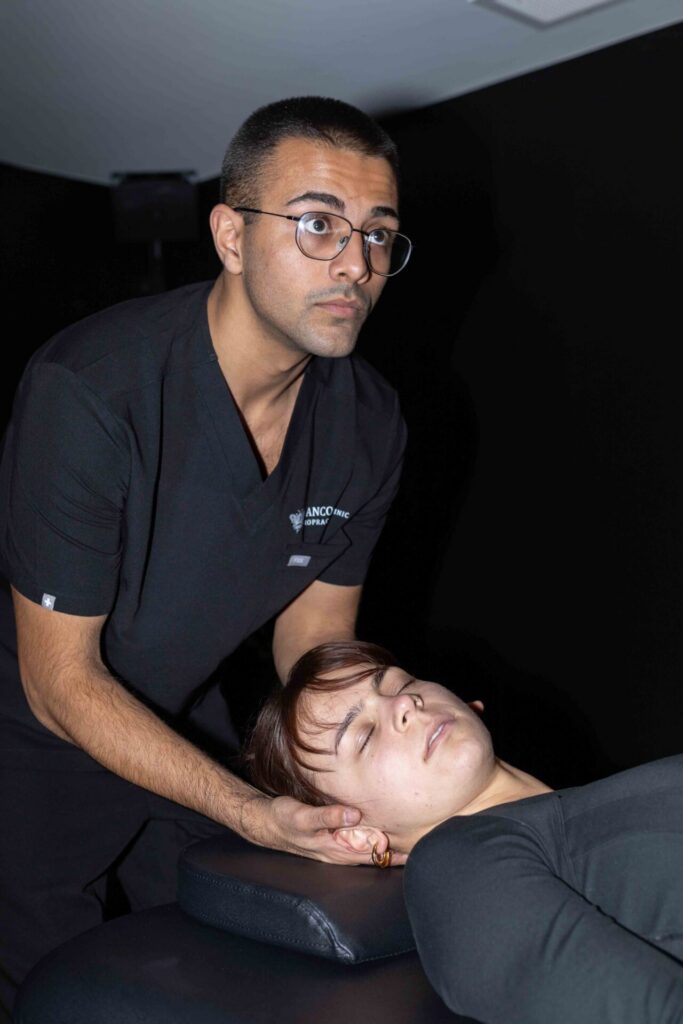
Targeted adjustments to the cervical and upper thoracic spine address the joint restrictions that are frequently found in patients with recurring headaches. By restoring normal movement to these joints, adjustments reduce the neurological irritation that contributes to head pain and relieve the muscular tension that develops around restricted joints over time.
Soft Tissue Therapy for Muscular Headache Triggers
Manual therapy directed at the muscles of the neck, shoulders, and base of the skull addresses the trigger points and tension patterns that drive tension headaches and amplify cervicogenic pain. This is particularly valuable for patients whose headaches are closely associated with periods of sustained desk work or stress.
Lifestyle and Postural Guidance
For many headache patients, environmental and lifestyle factors play a meaningful role in triggering episodes. Your chiropractor will work with you to identify personal triggers, review your posture and work setup, and provide practical guidance on sleep position, hydration, and screen habits that can reduce the frequency of your headaches over time.
Related Conditions
Headaches often occur alongside or are aggravated by the following conditions:
condition
Types of Headache We Treat
Not all headaches are the same. Effective treatment depends on correctly identifying the type of headache you are experiencing and understanding its underlying drivers. The most common types we see and treat in clinic include:
Cervicogenic Headache
Cervicogenic headache originates from dysfunction in the cervical spine, most commonly in the upper three vertebrae. Pain typically begins at the base of the skull and radiates forward over the top of the head or behind the eyes. It is often one-sided and may be accompanied by neck stiffness or restricted cervical movement. This type of headache responds particularly well to chiropractic adjustment.
Tension-Type Headache
Tension-type headache is the most common headache presentation worldwide. It is characterised by a dull, pressing sensation that is often described as a tight band around the head. It is typically bilateral and not aggravated by physical activity. Muscular tension in the neck, shoulders, and suboccipital muscles is a frequent contributing factor, and manual therapy directed at these structures can significantly reduce frequency and intensity.
Migraine
Migraine is a neurological condition involving recurring episodes of moderate to severe head pain, typically one-sided and pulsating in character, often accompanied by nausea, light sensitivity, and sound sensitivity. Some people experience an aura before the headache phase begins. While migraine has a primary neurological basis, musculoskeletal and postural factors can act as significant triggers. Chiropractic care can help reduce the frequency of migraines by addressing these contributing factors.
Occipital Neuralgia
Occipital neuralgia involves irritation of the occipital nerves, which run from the top of the spinal cord up through the scalp. It produces sharp, shooting, or electric pain in the upper neck and back of the head. It is often triggered by muscle tension or joint restriction in the upper cervical spine and can be effectively managed through targeted chiropractic treatment.
condition
The Connection Between the Cervical Spine and Head Pain
Understanding why chiropractic care can be effective for headaches requires an appreciation of the close anatomical relationship between the cervical spine and the structures involved in head pain. The upper three cervical vertebrae share neurological connections with the trigeminal nucleus, the area of the brainstem that processes pain signals from the face and head. This means that dysfunction in the upper cervical spine can directly influence the generation and experience of head pain.
Additionally, the suboccipital muscles at the base of the skull, the upper trapezius, and the sternocleidomastoid are all frequent contributors to both tension headache and cervicogenic headache through the development of active trigger points. Addressing these muscles through manual therapy is a core component of our headache treatment.
condition
How We Treat Headaches and Migraines at Ancoats Chiropractic Clinic
Chiropractic Adjustments for Headache Relief
Soft Tissue Therapy for Muscular Headache Triggers
Lifestyle and Postural Guidance
For many headache patients, environmental and lifestyle factors play a meaningful role in triggering episodes. Your chiropractor will work with you to identify personal triggers, review your posture and work setup, and provide practical guidance on sleep position, hydration, and screen habits that can reduce the frequency of your headaches over time.
condition
Related Conditions
Headaches often occur alongside or are aggravated by the following conditions:
- Neck Pain
- Muscle Spasms
- Vertigo
- Occupational Injuries
faqs
Frequently Asked Questions
Can a chiropractor really help with migraines?
How many sessions will I need to notice a difference?
Should I still see my GP about my headaches?
Can poor posture at a desk really cause headaches?
GETTING HERE

Conditions
OTHER RELATED CONDITIONS
We provide personalised care for a variety of conditions, ensuring treatment is tailored to your unique needs.
Booking
Book Your Headache Assessment in Manchester
If recurring headaches or migraines are affecting your quality of life, let us help you understand why. Call 07827 139839, email info@ancoatschiropractic.co.uk, or book online. New patients are welcome.