
Service
What Is Sciatica?
Sciatica is not a diagnosis in itself but rather a description of symptoms caused by irritation or compression of the sciatic nerve. The sciatic nerve is the longest and widest nerve in the human body, originating from nerve roots in the lower lumbar spine and sacrum, passing through the buttock, and travelling down the back of the leg as far as the foot.
When this nerve is compressed, stretched, or irritated at any point along its path, it produces the characteristic symptoms associated with sciatica: pain, burning, or electric sensations that travel along the course of the nerve, often accompanied by numbness, tingling, or muscular weakness in the affected leg.
True Sciatica Versus Piriformis Syndrome
It is important to distinguish between true sciatica, caused by nerve root compression in the lumbar spine, and piriformis syndrome, where the sciatic nerve is irritated by tightness or spasm in the piriformis muscle deep in the buttock. Both produce similar symptoms but require different treatment approaches. This distinction is one of the reasons a thorough clinical assessment is so important before treatment begins.
What Causes Sciatic Nerve Irritation?
The most common causes of sciatic nerve compression and irritation include:
- Lumbar disc herniation, where the inner material of a spinal disc pushes outward and presses on an adjacent nerve root
- Spinal stenosis, a narrowing of the spinal canal that reduces the space available for the nerve roots
- Degenerative disc disease and associated facet joint changes in the lower lumbar spine
- Spondylolisthesis, where one vertebra slips forward over the one below it
- Piriformis syndrome, where muscular tightness in the buttock irritates the sciatic nerve directly
- Sacroiliac joint dysfunction, which can create nerve irritation in the lower lumbar region
- Pregnancy-related pelvic changes that alter the mechanics of the lower spine and sacrum
Identifying the specific cause of your sciatica is essential because it directly determines which treatment approach will be most effective.
Recognising the Symptoms of Sciatica
Sciatica presents differently from person to person. Common symptoms include:
- Pain that travels from the lower back or buttock into the back of the thigh and calf
- A burning, electric, or shooting sensation along the course of the nerve
- Numbness or altered sensation in the leg or foot
- Muscle weakness in the affected leg, particularly when climbing stairs or rising from a chair
- Pain that worsens with prolonged sitting, coughing, or sneezing
- Difficulty finding a comfortable position when resting
If you are experiencing any combination of these symptoms, a clinical assessment will establish whether sciatica is the cause and where the nerve irritation is originating from.
How We Treat Sciatica at Ancoats Chiropractic Clinic
Clinical Assessment and Diagnosis
Because sciatica can arise from several different causes, accurate diagnosis is the foundation of effective treatment. Your chiropractor will carry out orthopaedic and neurological tests to identify the source of nerve irritation, assess the degree of nerve involvement, and rule out any presentations that require onward referral. This information shapes every aspect of your treatment plan.
Chiropractic Adjustments for Sciatica
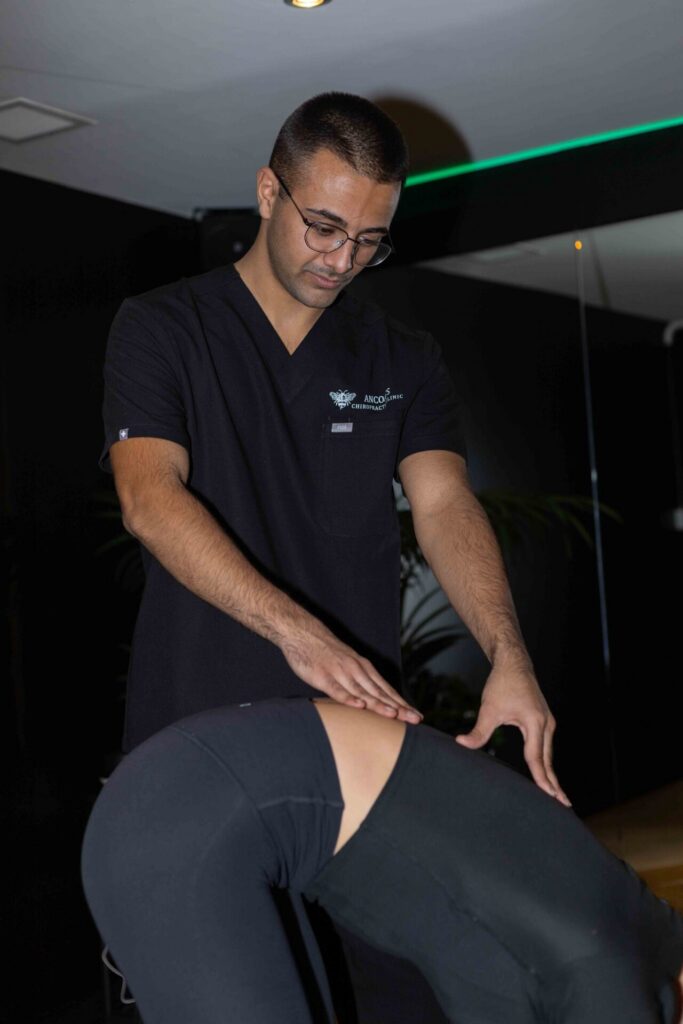
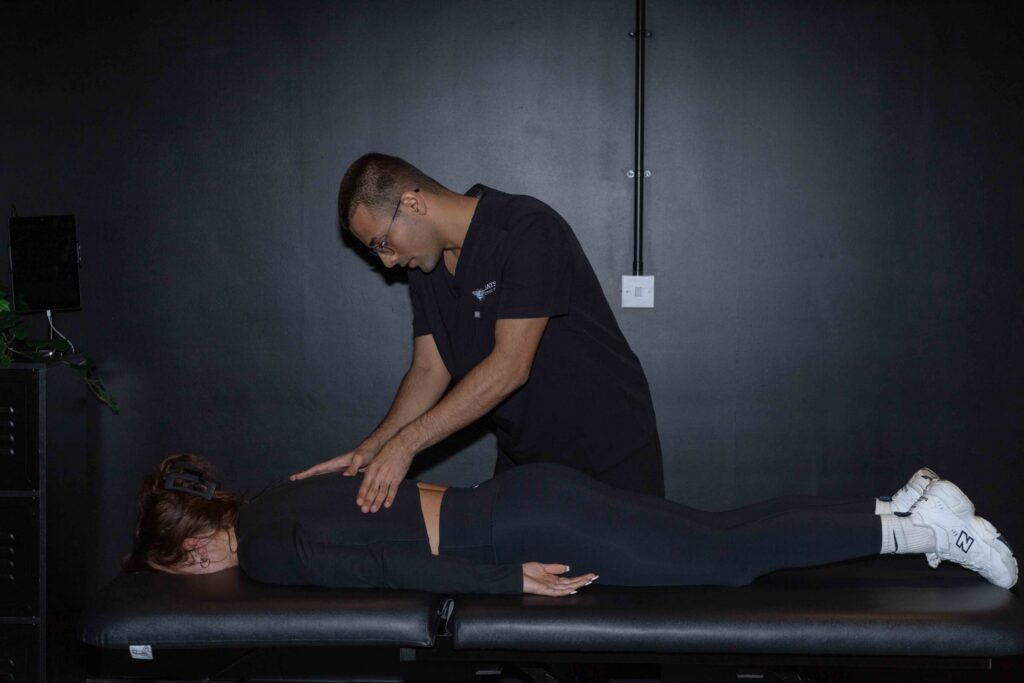
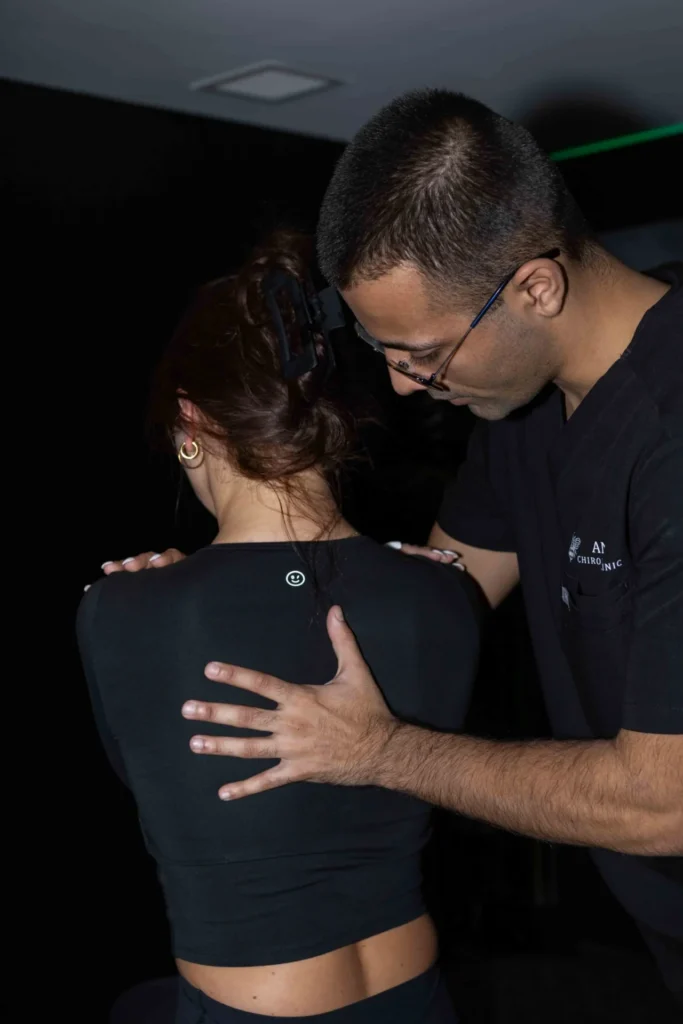
Where spinal joint restriction or lumbar disc involvement is contributing to nerve compression, targeted chiropractic adjustments can significantly reduce the mechanical pressure on the affected nerve root. By restoring proper movement to the lumbar spine and sacroiliac joints, adjustments help decompress the nerve and allow the inflammatory process around it to settle.
Soft Tissue Work for Piriformis and Gluteal Muscles
Where piriformis syndrome or significant gluteal muscle tension is contributing to sciatic nerve irritation, targeted soft tissue therapy to the muscles of the buttock and hip can provide considerable relief. This approach works alongside spinal treatment to address the full picture of what is causing your symptoms.
Rehabilitation for Long-Term Management
Sciatica has a tendency to recur if the underlying factors that contributed to the original episode are not addressed. A structured rehabilitation programme builds the core and lumbar stability needed to protect the spine under load, reduces the risk of recurrence, and gives you a practical framework for managing your back health going forward.
Related Conditions
Sciatica commonly presents alongside or contributes to the following conditions:
- Back Pain
- Hip and Joint Pain
- Muscle Spasms
- Occupational Injuries
- Sports Injuries
condition
What Is Sciatica?
Sciatica is not a diagnosis in itself but rather a description of symptoms caused by irritation or compression of the sciatic nerve. The sciatic nerve is the longest and widest nerve in the human body, originating from nerve roots in the lower lumbar spine and sacrum, passing through the buttock, and travelling down the back of the leg as far as the foot.
When this nerve is compressed, stretched, or irritated at any point along its path, it produces the characteristic symptoms associated with sciatica: pain, burning, or electric sensations that travel along the course of the nerve, often accompanied by numbness, tingling, or muscular weakness in the affected leg.
condition
True Sciatica Versus Piriformis Syndrome
It is important to distinguish between true sciatica, caused by nerve root compression in the lumbar spine, and piriformis syndrome, where the sciatic nerve is irritated by tightness or spasm in the piriformis muscle deep in the buttock. Both produce similar symptoms but require different treatment approaches. This distinction is one of the reasons a thorough clinical assessment is so important before treatment begins.
condition
What Causes Sciatic Nerve Irritation?
The most common causes of sciatic nerve compression and irritation include:
- Lumbar disc herniation, where the inner material of a spinal disc pushes outward and presses on an adjacent nerve root
- Spinal stenosis, a narrowing of the spinal canal that reduces the space available for the nerve roots
- Degenerative disc disease and associated facet joint changes in the lower lumbar spine
- Spondylolisthesis, where one vertebra slips forward over the one below it
- Piriformis syndrome, where muscular tightness in the buttock irritates the sciatic nerve directly
- Sacroiliac joint dysfunction, which can create nerve irritation in the lower lumbar region
- Pregnancy-related pelvic changes that alter the mechanics of the lower spine and sacrum
Identifying the specific cause of your sciatica is essential because it directly determines which treatment approach will be most effective.
condition
Recognising the Symptoms of Sciatica
Sciatica presents differently from person to person. Common symptoms include:
- Pain that travels from the lower back or buttock into the back of the thigh and calf
- A burning, electric, or shooting sensation along the course of the nerve
- Numbness or altered sensation in the leg or foot
- Muscle weakness in the affected leg, particularly when climbing stairs or rising from a chair
- Pain that worsens with prolonged sitting, coughing, or sneezing
- Difficulty finding a comfortable position when resting
If you are experiencing any combination of these symptoms, a clinical assessment will establish whether sciatica is the cause and where the nerve irritation is originating from.

condition
How We Treat Sciatica at Ancoats Chiropractic Clinic
Clinical Assessment and Diagnosis
Because sciatica can arise from several different causes, accurate diagnosis is the foundation of effective treatment. Your chiropractor will carry out orthopaedic and neurological tests to identify the source of nerve irritation, assess the degree of nerve involvement, and rule out any presentations that require onward referral. This information shapes every aspect of your treatment plan.
Chiropractic Adjustments for Sciatica
Soft Tissue Work for Piriformis and Gluteal Muscles
Rehabilitation for Long-Term Management
condition
Related Conditions
Sciatica commonly presents alongside or contributes to the following conditions:
- Back Pain
- Hip and Joint Pain
- Muscle Spasms
- Occupational Injuries
- Sports Injuries
faqs
Frequently Asked Questions
How do I know if I have sciatica or just back pain?
Can sciatica resolve without treatment?
Are there positions or movements I should avoid with sciatica?
When should sciatica be treated as a medical emergency?
GETTING HERE

Conditions
OTHER RELATED CONDITIONS
We provide personalised care for a variety of conditions, ensuring treatment is tailored to your unique needs.
Booking
Book Your Sciatica Assessment in Manchester
Sciatica that is properly assessed and treated tends to respond well. Call us on 07827 139839, email info@ancoatschiropractic.co.uk, or book your appointment online.