

condition
Understanding Hip and Joint Pain
Joints are complex structures. They rely on the coordinated function of cartilage, synovial fluid, ligaments, surrounding muscles, and the nervous system to move smoothly and absorb load. When any of these components is compromised, the joint can become painful, stiff, or unstable.
Hip and joint pain is often not simply a local problem. Restriction or dysfunction in one joint changes how the surrounding joints and structures move, creating compensatory patterns that can lead to pain and injury elsewhere. A patient presenting with hip pain, for example, may also have altered movement patterns in the lumbar spine, pelvis, knee, or even the foot. Addressing only the site of pain without understanding the full movement picture rarely produces lasting results.
The Hip Joint
The hip is a ball-and-socket joint designed to manage high loads across a wide range of movement. It plays a central role in almost every functional activity, from walking and climbing stairs to running and sitting. Hip joint dysfunction can arise from degeneration of the joint cartilage, labral tears, bursitis, impingement, or muscular imbalance around the joint. It may present as groin pain, lateral hip pain, or discomfort in the buttock, and can refer to pain in the thigh or knee.
Other Joints Commonly Treated
In addition to the hip, our team regularly treats pain and dysfunction in the following joints:
- Sacroiliac joints, which connect the spine to the pelvis and are a common source of low back and buttock pain
- Knee joints, where dysfunction may arise from altered mechanics, ligament strain, or degenerative change
- Shoulder joints, including the acromioclavicular joint and glenohumeral joint
- Thoracic and rib joints, which can produce sharp or catching pain through the mid-back and chest on movement or breathing
Common Causes of Hip and Joint Pain
The causes of hip and joint pain we most frequently assess and treat in clinic include:
- Osteoarthritis and age-related joint degeneration
- Hip impingement, where the shape of the hip joint creates mechanical conflict during movement
- Bursitis, inflammation of the fluid-filled sacs that cushion the joint
- Tendinopathy of the hip flexors, gluteal tendons, or iliotibial band
- Sacroiliac joint dysfunction
- Post-injury joint stiffness and capsular tightness
- Altered lower limb mechanics arising from foot, knee, or lumbar dysfunction
How We Treat Hip and Joint Pain at Ancoats Chiropractic Clinic
Joint Mobilisation and Chiropractic Adjustment
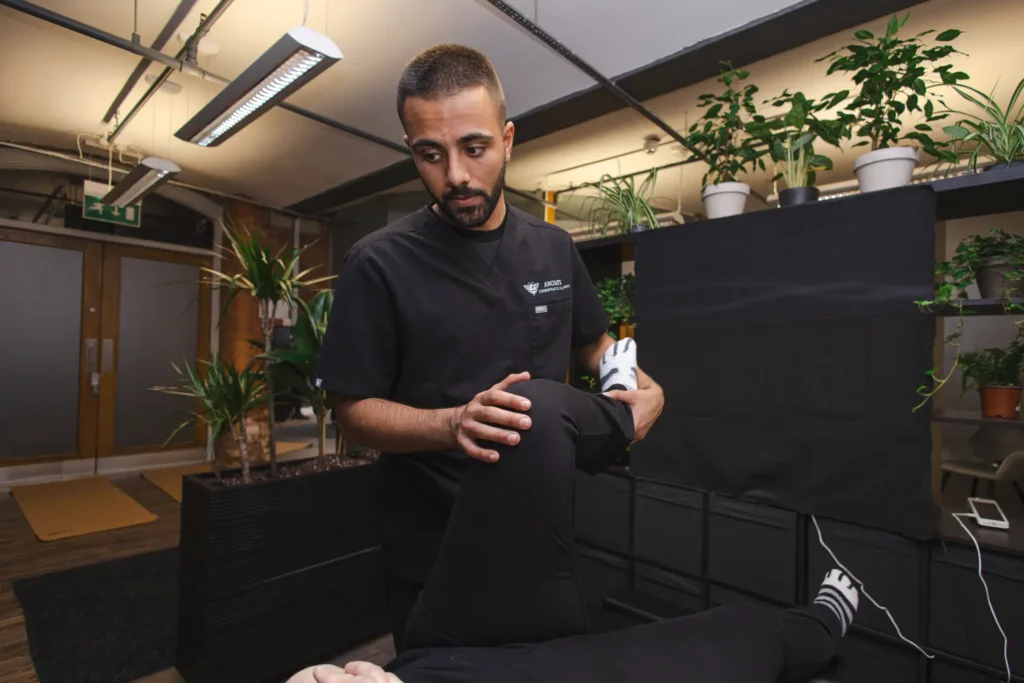
Restoring proper movement to restricted joints is a core component of treatment. Chiropractic adjustment and joint mobilisation techniques are applied to the affected joint and to any related areas of the kinetic chain that are contributing to the problem. This reduces mechanical stress on the joint, relieves the muscular tension that develops around it, and begins to restore normal movement patterns.
Soft Tissue Therapy
The muscles and connective tissues surrounding a painful joint are almost always involved in perpetuating the problem. Deep tissue therapy to the hip flexors, gluteal muscles, iliotibial band, and surrounding structures addresses the soft tissue component of hip and joint pain, improving tissue quality and reducing the compression forces acting on the joint itself.
Rehabilitation to Restore Strength and Stability
Lasting improvement in hip and joint pain requires more than manual therapy alone. A structured rehabilitation programme that builds strength in the gluteal muscles, hip abductors, and stabilising muscles of the trunk creates the physical capacity needed to protect the joint under load and during activity. This phase of treatment is essential for patients with degenerative joint conditions and for those who want to return to an active lifestyle.
Related Conditions
Hip and joint pain often presents alongside or contributes to the following conditions:
condition
Common Causes of Hip and Joint Pain
The causes of hip and joint pain we most frequently assess and treat in clinic include:
- Osteoarthritis and age-related joint degeneration
- Hip impingement, where the shape of the hip joint creates mechanical conflict during movement
- Bursitis, inflammation of the fluid-filled sacs that cushion the joint
- Tendinopathy of the hip flexors, gluteal tendons, or iliotibial band
- Sacroiliac joint dysfunction
- Post-injury joint stiffness and capsular tightness
- Altered lower limb mechanics arising from foot, knee, or lumbar dysfunction
condition
How We Treat Hip and Joint Pain at Ancoats Chiropractic Clinic
Joint Mobilisation and Chiropractic Adjustment
Soft Tissue Therapy
Rehabilitation to Restore Strength and Stability
Lasting improvement in hip and joint pain requires more than manual therapy alone. A structured rehabilitation programme that builds strength in the gluteal muscles, hip abductors, and stabilising muscles of the trunk creates the physical capacity needed to protect the joint under load and during activity. This phase of treatment is essential for patients with degenerative joint conditions and for those who want to return to an active lifestyle.
condition
Related Conditions
Hip and joint pain often presents alongside or contributes to the following conditions:
- Back Pain
- Sciatica
- Sports Injuries
- Arthritis
- Ankle Pain
- Muscle Spasms
faqs
Frequently Asked Questions
Is hip pain always related to the hip joint itself?
I have been told I have osteoarthritis in my hip. Can chiropractic care help?
When should hip pain be referred for surgical assessment?
GETTING HERE

Conditions
OTHER RELATED CONDITIONS
We provide personalised care for a variety of conditions, ensuring treatment is tailored to your unique needs.
Booking
Book Your Hip and Joint Pain Assessment in Manchester
If joint pain is limiting your movement and your quality of life, our team can help you understand why and what can be done about it. Call 07827 139839, email info@ancoatschiropractic.co.uk, or book online. New patients are welcome.