
condition
What Is Vertigo?
Vertigo is the false sensation of movement, typically spinning or rocking, when no actual movement is occurring. It differs from general dizziness or light-headedness in that it has a specific directional quality. Vertigo can last for seconds, minutes, or persist over longer periods depending on its cause, and it may be accompanied by nausea, vomiting, balance difficulty, or visual disturbance.
Understanding the specific type and origin of vertigo is essential because different causes require very different treatment approaches.
Benign Paroxysmal Positional Vertigo (BPPV)
BPPV is the most common cause of vertigo. It occurs when calcium carbonate crystals, known as otoliths or canaliths, become displaced from their normal position in the inner ear and migrate into one of the semicircular canals. When the head moves in certain positions, these crystals displace the fluid in the canal and send false movement signals to the brain. BPPV typically produces brief, intense episodes of vertigo triggered by specific head movements such as rolling over in bed or looking upward.
BPPV is highly responsive to a specific repositioning manoeuvre, most commonly the Epley manoeuvre, which is performed by a trained clinician to guide the displaced crystals back to their correct position. This treatment is simple, non-invasive, and can produce immediate relief.
Cervicogenic Dizziness
Cervicogenic dizziness arises from dysfunction in the upper cervical spine. The proprioceptive receptors in the joints and muscles of the upper neck play an important role in the brain’s ability to process balance and spatial orientation. When these joints are restricted or the surrounding muscles are in spasm, the signals they send to the brain can become distorted, producing a sensation of dizziness or unsteadiness that is closely associated with neck movement or neck pain.
This type of dizziness responds well to chiropractic treatment directed at the upper cervical spine and is an area in which our practitioners have specific clinical experience.
Other Causes of Vertigo
Other causes of vertigo include vestibular neuritis, labyrinthitis, and Meniere’s disease, all of which involve the inner ear and vestibular system. While these conditions are primarily managed medically, the balance and gait disturbances they cause can benefit from rehabilitation-based vestibular exercises, which our team can incorporate into a management plan alongside appropriate medical care.
The Importance of Accurate Assessment
The first priority in treating vertigo is establishing its cause. Applying the wrong treatment to the wrong type of vertigo is ineffective at best and potentially harmful at worst. At Ancoats Chiropractic Clinic, your chiropractor will carry out a structured assessment that includes a detailed history, positional testing, assessment of cervical spine function, and neurological screening. This allows a clinical diagnosis to be established before any treatment is applied.
Where the presentation suggests a cause that requires medical investigation rather than chiropractic management, you will be referred appropriately. Your safety and clarity of diagnosis always come first.
How We Treat Vertigo at Ancoats Chiropractic Clinic
Repositioning Manoeuvres for BPPV
When BPPV is diagnosed, the Epley manoeuvre or an alternative repositioning technique is applied to guide the displaced crystals back to their correct position within the inner ear. This is a clinically proven, highly effective treatment that often produces rapid improvement. Follow-up assessment confirms resolution and checks for any residual crystal displacement.
Chiropractic Adjustment for Cervicogenic Dizziness
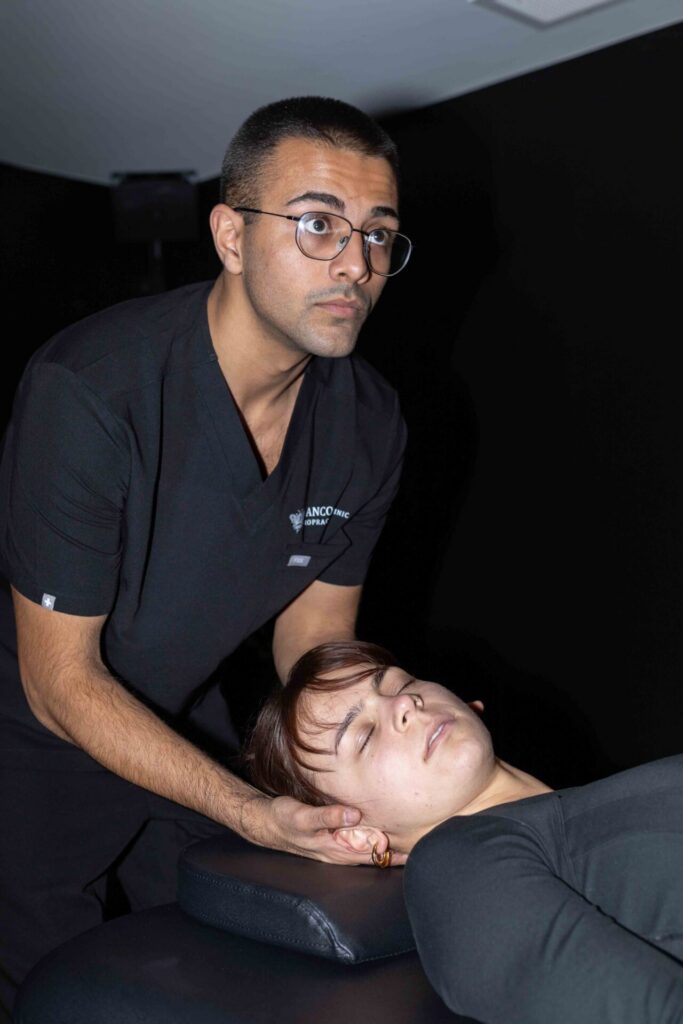
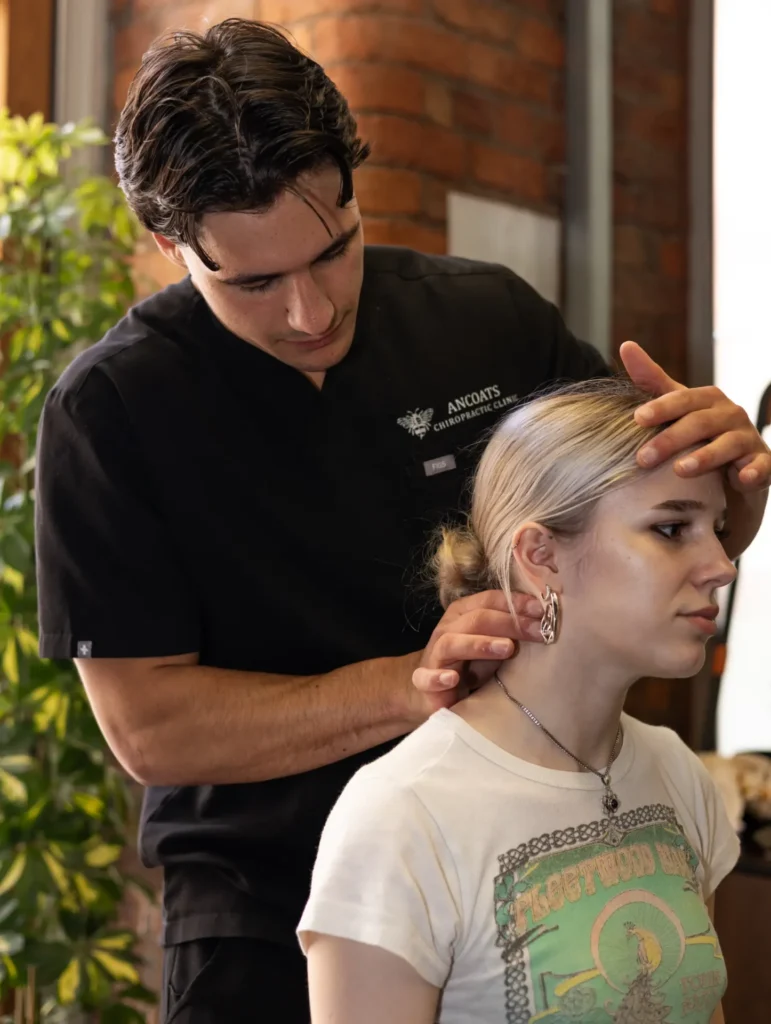
Where upper cervical dysfunction is identified as a contributing factor to dizziness, targeted chiropractic adjustments to the upper cervical spine address the joint restrictions and proprioceptive disturbances that are generating the abnormal signals. Improvement in dizziness often follows as cervical joint function is restored.
Vestibular Rehabilitation Exercises
For patients with persistent balance disturbance or vestibular dysfunction, a programme of specific vestibular rehabilitation exercises can improve the brain’s ability to process balance information and compensate for any residual inner ear disruption. These exercises are tailored to your specific deficits and progress as your balance improves.
Related Conditions
Vertigo and dizziness frequently occur alongside or are aggravated by the following conditions:
condition
What Is Vertigo?
Vertigo is the false sensation of movement, typically spinning or rocking, when no actual movement is occurring. It differs from general dizziness or light-headedness in that it has a specific directional quality. Vertigo can last for seconds, minutes, or persist over longer periods depending on its cause, and it may be accompanied by nausea, vomiting, balance difficulty, or visual disturbance.
Understanding the specific type and origin of vertigo is essential because different causes require very different treatment approaches.
Benign Paroxysmal Positional Vertigo (BPPV)
BPPV is the most common cause of vertigo. It occurs when calcium carbonate crystals, known as otoliths or canaliths, become displaced from their normal position in the inner ear and migrate into one of the semicircular canals. When the head moves in certain positions, these crystals displace the fluid in the canal and send false movement signals to the brain. BPPV typically produces brief, intense episodes of vertigo triggered by specific head movements such as rolling over in bed or looking upward.
BPPV is highly responsive to a specific repositioning manoeuvre, most commonly the Epley manoeuvre, which is performed by a trained clinician to guide the displaced crystals back to their correct position. This treatment is simple, non-invasive, and can produce immediate relief.
Cervicogenic Dizziness
Cervicogenic dizziness arises from dysfunction in the upper cervical spine. The proprioceptive receptors in the joints and muscles of the upper neck play an important role in the brain’s ability to process balance and spatial orientation. When these joints are restricted or the surrounding muscles are in spasm, the signals they send to the brain can become distorted, producing a sensation of dizziness or unsteadiness that is closely associated with neck movement or neck pain.
This type of dizziness responds well to chiropractic treatment directed at the upper cervical spine and is an area in which our practitioners have specific clinical experience.
Other Causes of Vertigo
condition
The Importance of Accurate Assessment
The first priority in treating vertigo is establishing its cause. Applying the wrong treatment to the wrong type of vertigo is ineffective at best and potentially harmful at worst. At Ancoats Chiropractic Clinic, your chiropractor will carry out a structured assessment that includes a detailed history, positional testing, assessment of cervical spine function, and neurological screening. This allows a clinical diagnosis to be established before any treatment is applied.
Where the presentation suggests a cause that requires medical investigation rather than chiropractic management, you will be referred appropriately. Your safety and clarity of diagnosis always come first.
condition
How We Treat Vertigo at Ancoats Chiropractic Clinic
Repositioning Manoeuvres for BPPV
When BPPV is diagnosed, the Epley manoeuvre or an alternative repositioning technique is applied to guide the displaced crystals back to their correct position within the inner ear. This is a clinically proven, highly effective treatment that often produces rapid improvement. Follow-up assessment confirms resolution and checks for any residual crystal displacement.
Chiropractic Adjustment for Cervicogenic Dizziness
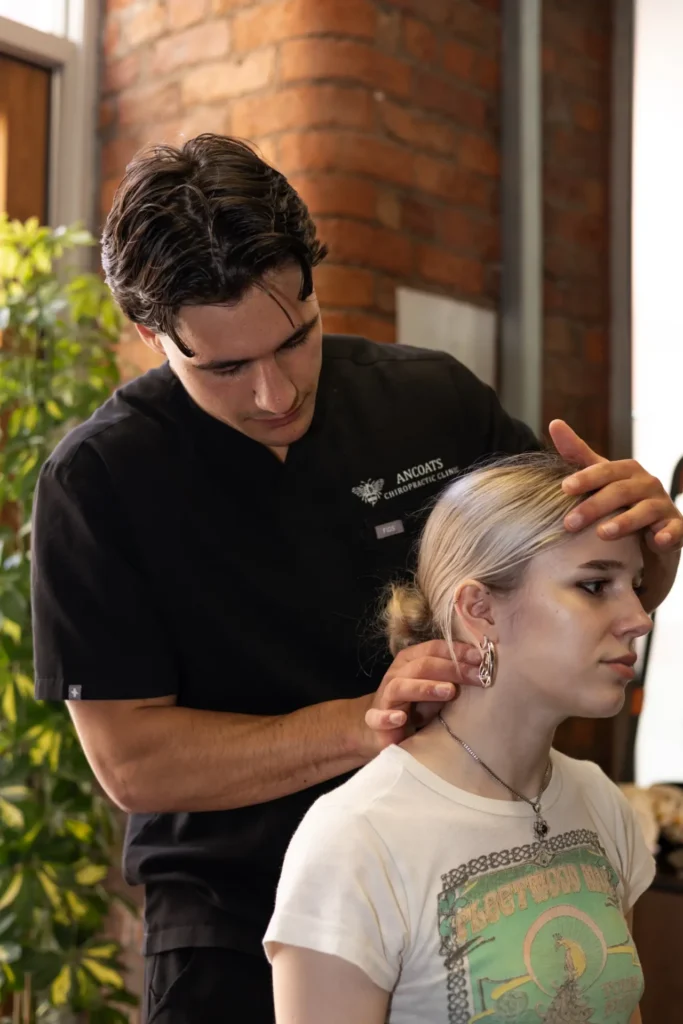
Where upper cervical dysfunction is identified as a contributing factor to dizziness, targeted chiropractic adjustments to the upper cervical spine address the joint restrictions and proprioceptive disturbances that are generating the abnormal signals. Improvement in dizziness often follows as cervical joint function is restored.
Vestibular Rehabilitation Exercises
For patients with persistent balance disturbance or vestibular dysfunction, a programme of specific vestibular rehabilitation exercises can improve the brain’s ability to process balance information and compensate for any residual inner ear disruption. These exercises are tailored to your specific deficits and progress as your balance improves.
condition
Related Conditions
Vertigo and dizziness frequently occur alongside or are aggravated by the following conditions:
- Neck Pain
- Headaches and Migraines
- Muscle Spasms
- Occupational Injuries
faqs
Frequently Asked Questions
How quickly does the Epley manoeuvre work for BPPV?
Can stress or anxiety cause vertigo?
Psychological stress does not cause the structural inner ear changes that produce BPPV or vestibular neuritis, but anxiety is closely associated with a specific type of balance disorder called persistent postural-perceptual dizziness, or PPPD. This condition involves a sensitisation of the brain’s balance processing systems and requires a specific management approach. Your chiropractor will discuss this with you if it appears relevant to your presentation.
Should I see my GP before attending the clinic for vertigo?
Can vertigo come back after treatment?
GETTING HERE

Conditions
OTHER RELATED CONDITIONS
We provide personalised care for a variety of conditions, ensuring treatment is tailored to your unique needs.
Booking
Book Your Vertigo Assessment in Manchester
If you are experiencing dizziness or episodes of vertigo, do not wait for them to pass on their own. Call 07827 139839, email info@ancoatschiropractic.co.uk, or book your assessment online. New patients are welcome.